Septic System Repairs
Septic System Repairs
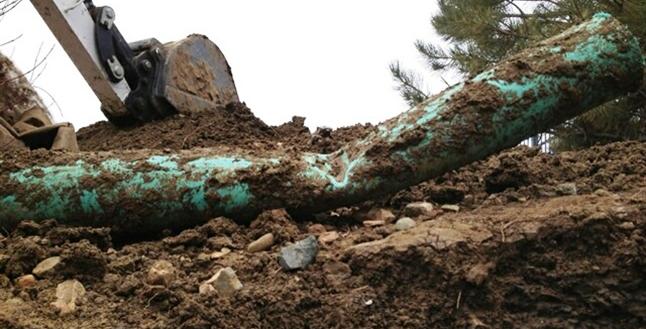
Occasionally, septic system components need to be replaced due to aging, corrosion and settling. Replacing broken and worn out components are crucial to keeping onsite waste water treatment system (OWTS) working properly.
Our repair services include:
- Repair broken inlet and outlet baffles
- Replacement of cracked or broken lids
- Replacement of broken inspection ports
- Repair broken or settled inlet and outlet pipes
- Install risers to bring access lids to grade
- Replacement of Effluent Pump and Floats
Less common, are the more major septic system repairs detailed below:
Septic Tank Replacement
While concrete septic tanks are known for their durability and may last up to 50 years, they can, in some cases, experience corrosion. This deterioration compromises the structural integrity of the tank and may eventually lead to collapse.
- Corrosion typically occurs at the outlet end of the tank, affecting the top surface around the access lid as well as the outlet end wall.
- As corrosion progresses, the edges of the access opening deteriorate, which can cause the lid to fall into the tank.
- In severe cases, the tank wall can deteriorate completely, allowing a probe rod to pass through into the surrounding soil. The entire outlet section of the tank top may collapse inward, along with the overlying soil.
- If the tank is located near the home, replacement is recommended for safety reasons.
The replacement process includes:
- Excavating a new tank location using a backhoe
- Installing the new tank
- Pumping out the existing tank
- Demolishing and backfilling the old tank
- Re-routing and reconnecting the sewer line (inflow from the building and outflow to the drain field)
- Completing a health department inspection
- Covering the tank and installing risers and lids at grade for easy access
This process typically takes approximately two days and does not interrupt normal system usage.
After installation, the backfill around and over the tank is compacted. The soil is left slightly mounded to allow for 10–15% natural settling over time. In most cases, there is no excess soil, as material from the excavation is used to fill the old tank site.
Drainfield Replacement
There are several warning signs that indicate a Soil Treatment Area (STA) has failed and is no longer able to disperse effluent at a rate equal to the flow from the home. For more information, see “Signs of Soil Treatment Area Failure” under the Troubleshooting section.
- If a new STA must be installed, the failed STA may potentially be reused after resting for 1–2 years. This can be accomplished by alternating flow between the new and old fields using a diverter valve
- Before installing a new STA, a repair permit from the health department and a soil test are required.
- Once a soils report is provided, we will promptly provide an estimate for the replacement. Replacement costs can vary significantly depending on the size and type of system required.
In some cases, a commercial-grade treatment product can be applied to help extend the life of a drainfield when immediate replacement is not feasible due to budget constraints. However, this is typically a temporary solution.This treatment works by oxidizing sulfides and introducing oxygen into the drainfield—similar to the natural recovery process that occurs when a system is allowed to rest, but at an accelerated rate. The product is applied between the septic tank and the drainfield. System usage does not need to be restricted during treatment. However, for optimal results, the drainfield should be dewatered to the soil interface, either by resting the system or by pumping the drainfield.
The treatment is environmentally friendly and does not introduce substances that are not already naturally present in the environment.
Helpful Information